
Not a single retail outlet ran dry. Every household that wanted a cylinder got one. India faced neither a 1991 moment nor a 2013 one. Macroeconomic stability held. This was not an accident, and it was not luck alone. It was the work of a government that chose to act as it had during the pandemic -- deliberately and gradually, building one measure upon another rather than reaching for a single dramatic lever, explains V Anantha Nageswaran, chief economic advisor to the Government of India.

The substantially increased economic dualism may exert lasting negative influences which could include a reduced potential for economic growth; the persistence of a very weak employment and poverty situation; rising social and political discord; and heightened vulnerability to geopolitical challenges, cautions Shankar Acharya, former chief economic adviser to the Government of India.

'...especially pressure on the rupee, the current account deficit, and foreign exchange outflows.' 'The key question over the next several months is whether the government can prevent external turbulence from feeding into domestic economic pessimism.'

Foreign Secretary Vikram Misri held extensive discussions with China's Vice Foreign Minister Hua Chunying and other senior officials in Beijing, reviewing bilateral relations, trade, cultural exchanges, and emphasising peace and tranquillity in border areas. His visit aims to advance the vision of both nations as development partners.

'I don't see fear becoming a dominant factor for retail investors.'

Notwithstanding the economic complementarities and the host of agreements for deepening economic relation on a host of areas, both sides share common viewpoints on the foreign policy domain and seek common grounds to serve as a counterweight to China, notes Dr Rajaram Panda.

The Sports Ministry has provisionally recognised the Federation of Motor Sports Clubs of India (FMSCI) as a National Sports Federation (NSF), a move aimed at promoting motorsport and facilitating Formula 1's return to India. This recognition requires FMSCI to amend its constitution to comply with governance acts, and a Task Force is being established to assess the benefits and challenges of hosting major motorsport events.

Commercial banks in India recorded their highest credit growth in two years, accelerating to 18.6 per cent year-on-year by June 27, while also mobilising nearly 7 trillion in deposits, marking the third-highest fortnightly deposit growth in 29 years.

The vaccine has been cleared for use in individuals aged 4 to 60 years and can be administered irrespective of whether the taker has had dengue before, eliminating the need for pre-vaccination screening.

Its strength is set to increase by 3 seats once the current round of Rajya Sabha polls for 27 seats are concluded on June 28.
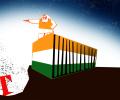
India is waiting for assurance from the US on comparative advantage over other economies under the deal.

The United States has implemented a 10 per cent tariff on goods imported from India and 16 other countries, citing efforts to combat forced labour in production.

That means making it easier to invest, protecting investors through predictable rules, and avoiding policy reversals after investments have been made, notes Rajeswari Sengupta.

Hyderabad-based Midwest Ltd has become the first Indian private company to secure overseas critical mineral mines, sealing a deal with Indonesia's state-run PT Perusahaan Mineral Nasional (PERMINAS) to ensure a long-term supply of rare earths.

Despite decades of efforts towards energy transition, oil will remain the critical energy source for all nations for some decades. We can hope for peace opening the Strait of Hormuz, but must prepare for war closing it, points out former foreign secretary Ranjan Mathai.

Beijing clearly intends to extend the China-Myanmar Economic Corridor to Bangladesh as part of its larger Maritime Belt and Road Initiative to boost its Indian Ocean presence.
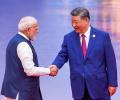
India's dual pursuit of a robust strategic partnership with Washington and a pragmatic, tension-management policy with Beijing represents the essence of modern multi-alignment. By embracing economic pragmatism, learning to compartmentalize political differences, and engaging in continuous dialogue, India can secure its borders, grow its economy, and contribute to a stable, multipolar Asian century, points out Ambassador Rajasekhar.

Vaibhav Sooryavanshi hit an 18-ball half-century as India crushed Zimbabwe by seven wickets to go 1-0 up in the 3-match T20I series in Harare on Thursday.

The aim is to win over the country's enterprises, developers and startups as AI systems shift from answering questions to autonomously executing tasks.

Congress leader Rahul Gandhi has warned of a severe economic crisis looming over India, criticising Prime Minister Narendra Modi's economic policies and foreign travels.
India is adopting a two-pronged strategy for artificial intelligence development, focusing on open-source models and indigenous innovation to counter global access restrictions on advanced AI technologies. The government aims to support local developers and ensure AI creates tangible economic impact across various sectors, rather than being solely driven by market speculation.

'The flip side of this is that he won't hesitate to call out India if he thinks its policies are hurting US economic interests or border US foreign policy goals.'
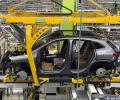
Domestic passenger vehicle dispatches in India reached a record 12,73,811 units in the first quarter of FY27, marking a 25.9 per cent growth, driven by robust domestic demand despite geopolitical headwinds, according to SIAM.

S&P Global Ratings projects India's economic growth to slow to 6.6 per cent in FY27, down from 7.7 per cent in FY26, citing energy stress and a potential sub-par monsoon.

West Bengal Chief Minister Suvendu Adhikari outlined his government's priorities, focusing on strengthening the state's economy, attracting investment to create jobs, and improving law and order. He criticised the previous administration for alleged corruption and appeasement politics, while highlighting initial successes in border management and reducing criminal activities.

India's electric vehicle market achieved a significant milestone in June 2026, accounting for over 12% of total vehicle retail sales for the first time. This growth, driven by strong demand across electric two-wheelers, passenger vehicles, and commercial vehicles, saw overall EV retail sales surge by 63% year-on-year to a record 306,220 units, indicating a mainstream shift in mobility.

Union Finance Minister Nirmala Sitharaman has warned that the ongoing West Asia crisis is not merely a geopolitical issue but will directly lead to higher fuel costs for common people and businesses, impacting shipping, input availability, and export orders.

External Affairs Minister S Jaishankar met his Chinese counterpart Wang Yi in Manila, reiterating that peace and tranquillity in border areas are prerequisites for normal India-China relations. He stressed the importance of mutual respect, interest, and sensitivity, while also raising concerns about market access, trade imbalance, and supply chain uncertainties.

Indian cricket captain Shubman Gill shared his approach to handling pressure, focusing on controllable factors and avoiding external influences.
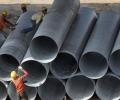
India has successfully negotiated the protection of its steel export interests under the free trade agreement with the UK, ensuring 85 per cent of its outbound shipments remain outside Britain's steel safeguard measures. This consensus addresses a key sticking point ahead of the comprehensive economic and trade agreement (CETA) coming into force on July 15.

India is navigating a complex diplomatic landscape, attempting to balance its 'forever honeymoon' with the Israel-UAE-Bahrain axis against its historical ties with Iran, as evidenced by recent high-level visits and evolving geopolitical realignments in the Middle East, observes Ambassador M K Bhadrakumar.

Dhaka and Beijing on Thursday agreed to strengthen cooperation on the management of the Teesta and other rivers and signed 13 agreements to bolster bilateral ties following talks between Bangladeshi Prime Minister Tarique Rahman and Chinese Premier Li Qiang.

'We have to pull 80 million workers out of agriculture and go back to where we were in 2014. That itself is going to be a huge task.' 'We have already lost time, and that is a catastrophe impending.''

The visit was expected to project Assam as the gateway to Southeast Asia and reinforce the state's emergence as a preferred investment destination.

India and Australia have signed significant agreements covering civil nuclear energy, maritime security, and critical minerals, reinforcing their partnership's role in ensuring a peaceful Indo-Pacific. The pacts facilitate uranium supply from Australia to India and enhance cooperation in defence, cyber, and critical technologies.
The US and India are collaborating to de-risk global supply chains for artificial intelligence technologies, particularly in semiconductor manufacturing and critical minerals processing. This partnership is facilitated through the US-led Pax Silica initiative, which aims to address over-concentration issues and single points of failure in supply chains, fostering a resilient global economy.

Poland's Secretary of State, Wladyslaw T Bartoszewski, has credited Prime Minister Narendra Modi with preventing Russian President Vladimir Putin from using tactical nuclear weapons in Ukraine in late 2022, highlighting Modi's significant influence on the Russian leader.

The boundary mess between India and Nepal needs a solution in a manner as mentioned by Nepal's Foreign Minister Shishir Khanal: 'On evidence not emotions', counsels Lieutenant General Shakti Gurung (retd).

India's passenger vehicle industry is poised for a record-breaking year in 2026, propelled by robust dispatches in the first half of the calendar year and strong demand for utility vehicles, despite facing several economic challenges.

A parliamentary committee is actively working to establish a mechanism for implementing the 'One Nation, One Election' reform, with its chairperson, PP Chaudhary, indicating that it could be fully operational by the 2029 general elections. Chaudhary highlighted that nearly 99 per cent of civil society stakeholders consulted have supported the proposal, which aims to mitigate an estimated Rs 7 lakh crore economic loss due to frequent polls.
